The Hidden Danger in Aging Buildings: Corroding Wall Ties & How to Fix Them
The durability of American masonry structures is a reflection of engineering precision and architectural ingenuity. From historic brownstones along the East Coast to industrial complexes in the Midwest, these buildings form the backbone of our built environment.
However, a critical yet frequently overlooked structural issue—cavity wall tie corrosion—poses a significant risk to their long-term stability. If left undetected, this deterioration can compromise the integrity of masonry facades, leading to structural failures that endanger both safety and preservation efforts.
Cavity wall ties serve a fundamental role in stabilizing masonry veneer walls by linking the outer and inner layers. Yet, many older buildings—constructed before advancements in material sciences—rely on wall ties made from steel alloys that were insufficiently protected against corrosion. Over time, exposure to moisture, environmental pollutants, and temperature fluctuations deteriorates these ties, leading to structural vulnerabilities that may remain unnoticed until significant damage has occurred.
Recognizing the Risks of Wall Tie Corrosion
The consequences of corroded wall ties are far-reaching. As ties degrade, they lose their ability to secure the outer masonry layer to the inner structural wall. The initial signs may be subtle—vertical cracks in the mortar, localized bulging of brickwork, or rust stains on the exterior. However, left unchecked, these issues can escalate into severe structural failures, including veneer detachment, endangering both property and public safety.
Corroding wall ties are often a hidden hazard. Unlike surface damage, tie corrosion usually occurs out of sight within the wall cavity, making it difficult to detect without proper diagnostic tools. Left unaddressed, this issue can escalate quickly, leading to costly repairs or even dangerous structural failures.
The structural degradation caused by cavity wall tie failure extends beyond aesthetics. If compromised ties are not identified and replaced, entire sections of a building’s façade may become unstable, increasing the risk of collapse. This makes early detection and intervention critical for preserving both historic and modern structures.
Inspection and Diagnosis: Identifying the Hidden Threat
Assessing cavity wall tie corrosion requires a methodical approach. A thorough visual inspection can reveal external signs of deterioration, such as cracking, bowing, and rust staining. However, a deeper analysis is often necessary to confirm the extent of the damage. Endoscopic evaluations, metal detectors, boroscope and drone inspections allow engineers and restoration professionals to assess the condition of embedded wall ties without causing unnecessary disruption to the structure. Proactive inspections should be integrated into regular building maintenance programs, particularly for structures over 50 years old or those located in high-moisture environments and coastal areas. By identifying corroded ties early, building owners and preservationists can implement targeted interventions before structural integrity is severely compromised.
Introducing the Brit-Tie: A Proven, Patented, Solution for Cavity Wall Tie Replacement
Addressing the issue of wall tie corrosion requires not only replacing failed ties but also ensuring that new installations provide longterm durability and resistance to environmental factors. This is where the patented Brit-Tie Cavity Wall Tie Replacement System, developed by masonry restoration expert Alan Pettingale, offers an innovative and reliable solution.
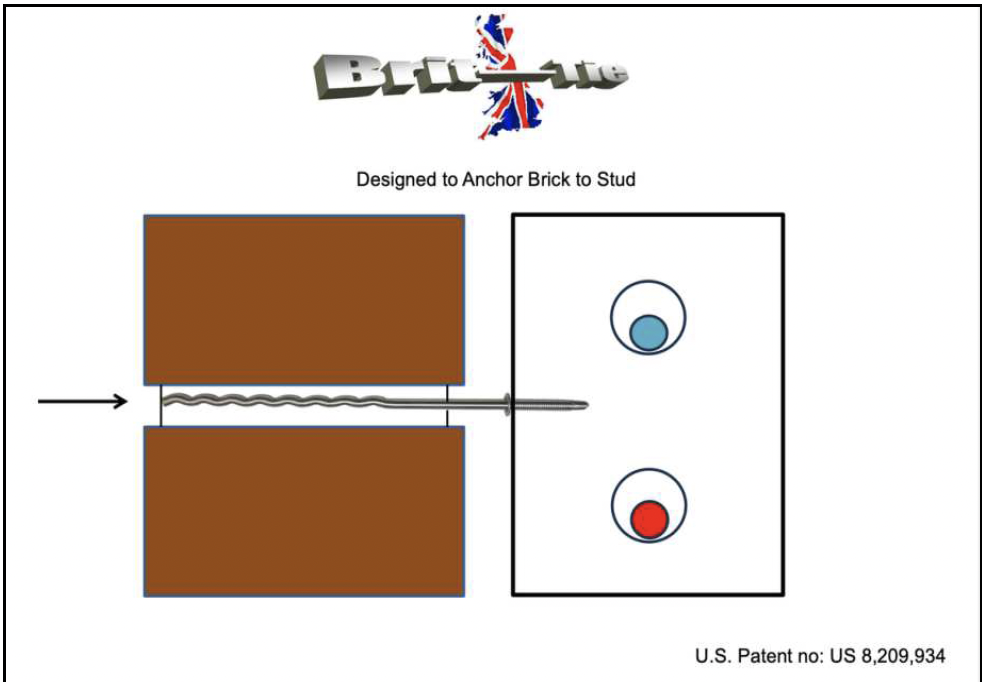
Brit-Tie Screw in Wall Tie is a stainless steel wall tie used to anchor single wythe brick walls to steel and wooden vertical studs. The design allows the tie to be installed into the mortar bed joint to provide a chemical and mechanical connection between the masonry façade and vertical studs. The tie is designed to with stand tension and compression loads.
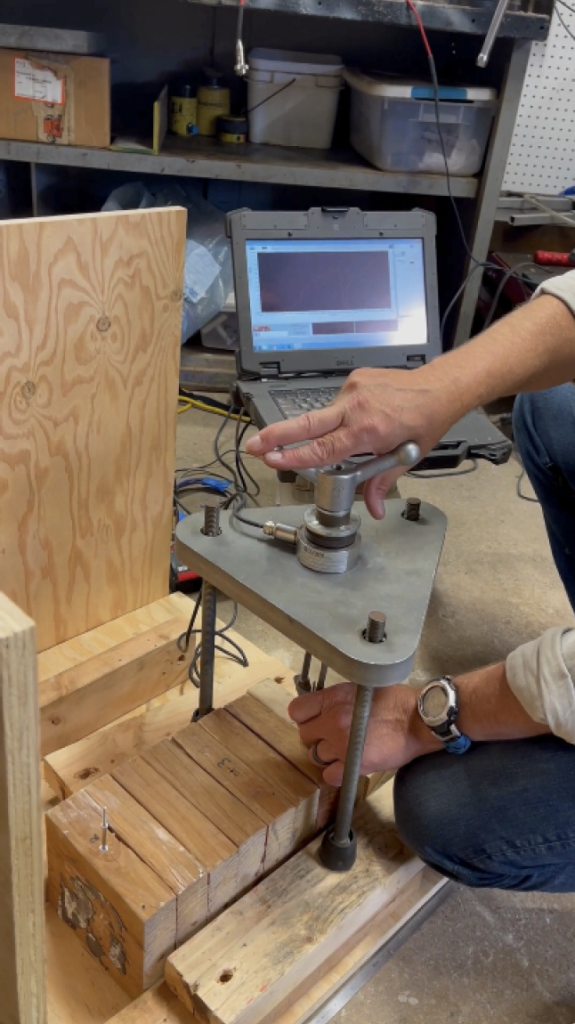
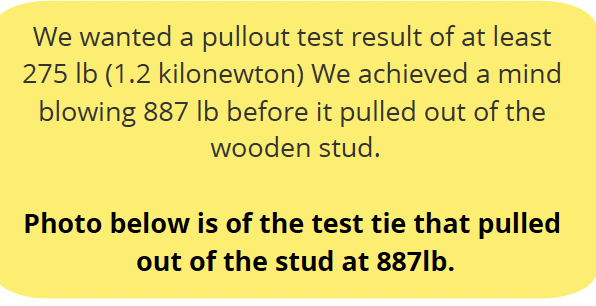
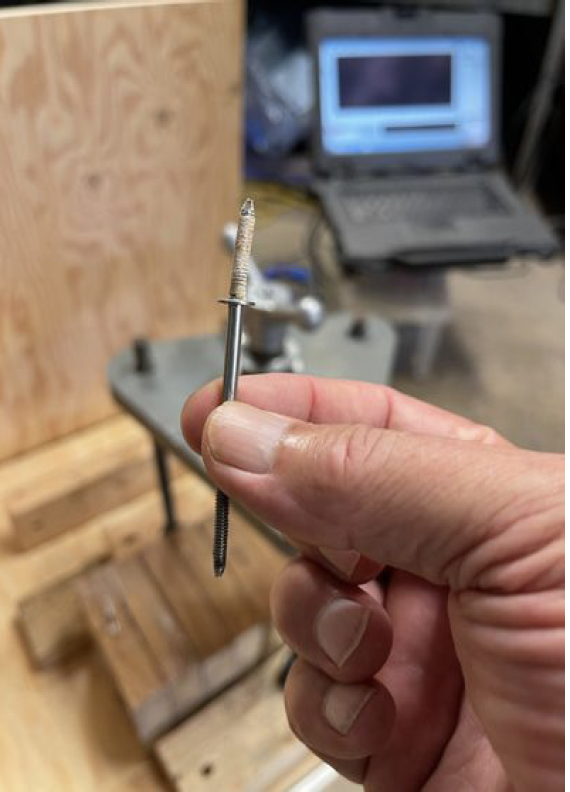
The Brit-Tie wall tie is installed using a patent pending setting tool that is used with an SDSPlus shank drill to screw and countersink the tie. Brit-Tie performs in wood and steel studs, and has been throughly tested in a laboratory to achieve great pull-out tests.
Features:
• Installs quickly and easily- With the drill and installs faster than competitive products
• Provides a inconspicuous repair that preserves the aesthetics of the building. After installation the tie is countersunk up to ½ “ below the surface, allowing the tie location to be patched with color matched mortar
• Corrosion resistant steel.
• Patented manufacturing process results in a depth gauge so the tie cannot be installed to deep into the stud
• Batch numbers are printed on every box for easy identification and inspection. Material: Type 304 stainless steel (316 by special order contact Brit-Tie for details)
Test Criteria: Lab Tested
Installation:
• Drill a 10mm pilot hole through the mortar bed joint.
• Position the wavy end of the tie in the Brittie fastener in the installation tool and insert the tie into the pilot hole.
• The tie can be cut to adjust for varying cavity widths
• With the SDS plus drill the tie into the stud until tight
• Apply twin pack epoxy resin to the bed joint pilot hole to secure the Brit-tie place
• The tip of the tie is countersinks below the surface. Patch the holes with color appropriate mortar.
• Brit Tie Fastener installation tool has a U.S. patent pending
• The fastener is required for correct installation of the Brit-Tie. Speeds up installation and countersinks the tie into the façade material. The new and updated design with no moving parts drastically reduces the cost of the tool. Improves the longevity and prevents the Brit-Tie from jamming.
Installation tool sold separately.
The Brit-Tie system utilizes high-grade stainless steel wall ties, designed to resist corrosion and provide superior longevity compared to traditional steel ties. Unlike conventional replacement methods that require extensive demolition or invasive repairs, Brit-Tie allows for precise and minimally disruptive tie replacement, preserving the structural and aesthetic integrity of the building. This system is particularly advantageous for:
• Historic cavity walls, where maintaining original materials and architectural details is paramount.
• Commercial and residential buildings, where occupants need minimal disruption during restoration.
• Industrial structures, where cost-effective, longter solutions are critical to maintaining operational safety.
By integrating Brit-Tie into cavity wall tie remediation efforts, engineers and restoration professionals can reinforce buildings with a system that ensures structural stability for generations to come.
Implementing a Proactive Approach to Masonry Preservation
With the increasing recognition of cavity wall tie corrosion as a significant structural issue, industry professionals must take a proactive stance in addressing this challenge.
The key steps include:
1. Regular Inspections: Establishing a routine assessment schedule for buildings susceptible to tie corrosion.
2. Early Intervention: Utilizing diagnostic tools to detect wall tie degradation before it compromises the structure.
3. Innovative Solutions: Implementing proven systems like Brit-Tie to ensure safe and lasting repairs.
4. Education & Awareness: Informing building owners, architects, and engineers about the risks of tie corrosion and the available solutions.
Conclusion: Preserving the Legacy of Our Built Environment
Cavity wall tie corrosion is not merely an isolated concern—it is a widespread issue that affects countless masonry structures across America. The integrity of our buildings, and the safety of those who inhabit them, depends on the proactive identification and remediation of this hidden threat.