Urgent Attention Needed: The Rising Crisis in the Masonry Repair Industry
The masonry repair industry is facing a reckoning.
Back in 2009, Alan Pettingale raised concerns about dangerous trends developing across the building sector. More than a decade later, those warnings are not only still relevant—they are accelerating. Billions are spent every year fixing structural failures, yet the root cause often goes ignored: neglected masonry systems.
If the industry does not correct course, the cost—financial and human—will continue to rise.
The Overlooked Cost of Foundation Repair
In the United States, billions of dollars are spent annually on foundation repair. That number rivals spending related to major natural disasters such as floods, hurricanes, tornadoes, and earthquakes.
Yet masonry restoration receives only a fraction of that investment.
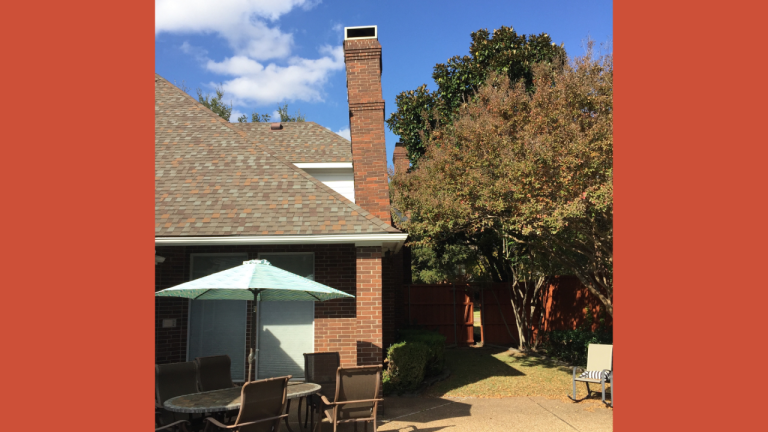
This imbalance makes little sense. When a foundation shifts, the masonry it supports cracks, separates, and destabilizes. Brick veneer, structural walls, chimneys, parapets—these components all depend on a stable base. Focusing exclusively on foundation repair without addressing the masonry above it is a short-term solution to a long-term structural problem.
A strategic shift toward proactive masonry inspection and repair would dramatically reduce these cascading failures.
Poor Workmanship in New Construction
The problem is not limited to aging buildings.
New construction is showing alarming signs of premature failure:
- Corroded wall ties discovered within one year of installation
- Improper flashing details
- Blocked veneer wall cavities
- Non-functioning weep holes
- Mortar droppings bridging cavities
- Inadequate expansion joint design
These errors compromise structural integrity, moisture management, and long-term durability. When moisture becomes trapped behind veneer walls, deterioration accelerates—leading to mold growth, corrosion, freeze-thaw damage, and interior finishes failure.
The cost of correcting preventable installation errors far exceeds the cost of doing the work properly from the start.
Aging Historic Buildings: A Growing Liability
Across America, historic buildings are reaching critical age thresholds.
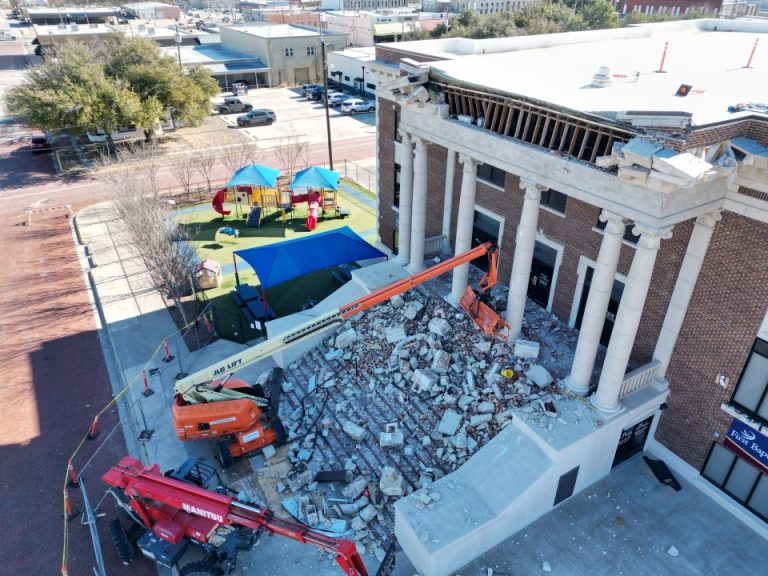
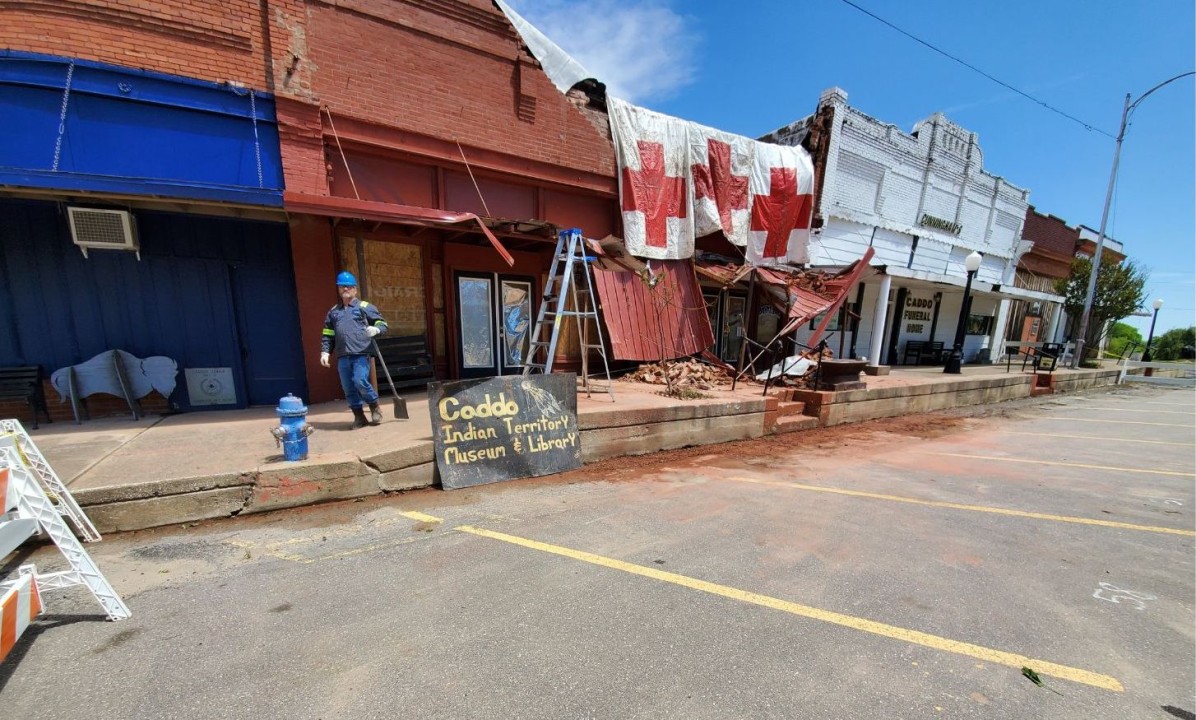
Small towns investing in revitalization projects often focus on aesthetics—fresh paint, signage, landscaping—while structural masonry concerns remain unaddressed. Failing parapets, deteriorated cornices, unstable chimneys, and compromised load-bearing brick walls pose serious risks to pedestrians and occupants.
Why This Matters
Historic masonry buildings were constructed using materials and methods vastly different from today’s standards. Lime mortars, soft brick, and traditional construction assemblies require specialized repair techniques—not modern Portland-heavy patchwork.
Improper repairs can accelerate decay rather than stop it.
Preservation is not cosmetic. It is structural.
The Hidden Consequences of Failing Masonry
Masonry deterioration rarely announces itself dramatically at first. It begins quietly:
- Hairline cracking
- Efflorescence
- Minor displacement
- Damp interior walls
Over time, these seemingly minor issues lead to major consequences:
- Black mold from chronic moisture intrusion
- Wood rot in structural framing
- Insect infestation
- Interior air quality problems
- Falling masonry hazards
These outcomes are frequently misdiagnosed as isolated issues. In reality, they often trace back to failing masonry systems.
Masonry problems are rarely isolated. They are systemic.
An Industry Unprepared for What’s Ahead
Despite mounting failures, the building industry remains disproportionately focused on new construction rather than repair science.
Professor Tom Grimm once observed that of the approximately 12,000 technical papers written on masonry, nearly all focused on new construction rather than restoration. That imbalance reveals a structural knowledge gap.
We lack:
- Comprehensive repair standards
- Widely adopted specialized training
- Clear guidance for decision makers
- Economic models for long-term masonry preservation
Without improved education and standards, the volume of masonry failures will outpace the expertise available to correct them properly.
The result? An avoidable epidemic of structural decay.
The Role of The Masonry Society
Organizations such as The Masonry Society are working to bridge this divide.
By coordinating between field practitioners, engineers, contractors, and researchers, they aim to align theory with field realities. Technical publications, training initiatives, and cross-disciplinary collaboration are essential if the industry is to mature beyond reactive patchwork repairs.
Repair science must become as respected—and funded—as new construction design.
A Necessary Shift in Mindset
The building industry must rebalance its priorities.
Preserving existing structures is not sentimental—it is economic and structural common sense. From single-family homes to courthouses, city halls, churches, and historic town squares, masonry buildings represent generational investment.
We already built them.
Now we must steward them.
Proactive masonry inspection, skilled restoration, proper detailing, and improved education are not optional—they are urgent.
The question is not whether masonry failures will increase.
The question is whether the industry will respond in time.