
Use of Lateral Restraint Anchors for Stabilization of Multiwythe Masonry Walls
Alan Pettingale & J. Eric Peterson
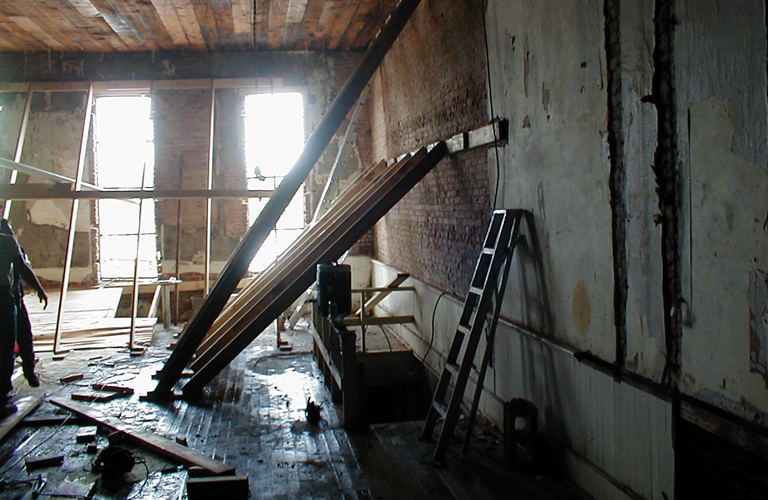
Multiwythe masonry walls—particularly those in 19th and early 20th century mercantile buildings—were designed as mass systems. They rely on thickness, gravity, and diaphragm action rather than modern reinforcement. When maintenance lapses, loads shift, or moisture accelerates deterioration, these walls begin to move out of plane.
Left unchecked, bulging progresses to cracking, separation at floor lines, and ultimately structural instability.
One of the most efficient and historically consistent methods of stabilization is the use of lateral restraint anchors—a strategy that blends centuries-old principles with modern engineering and materials science.
What Are Lateral Restraint Anchors?
A lateral restraint anchor is a system of:
- Threaded rods, straps, plates, or bars
- Adhesive (epoxy) or mechanical anchors
- Grouts or cementitious encapsulation
- Tension and compression transfer elements
These components create an intermediate support condition within the height of a masonry wall, reducing unbraced length and resisting lateral displacement.
Rather than reconstructing walls, restraint systems allow stabilization in place, preserving historic fabric and reducing cost.
Why Multiwythe Walls Fail
Most failures stem from a combination of:
- Eccentric gravity loads from floor and roof systems
- Diaphragm inadequacy
- Long-term moisture infiltration
- Seismic or wind loads
- Differential settlement
When floor systems do not adequately brace exterior walls, outward bulging typically develops at floor lines.
Common Indicators

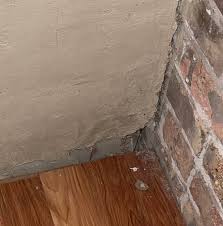

- Separation between plaster and ceiling
- Cracks at common walls
- Exterior brick bulging
- Floor joist pullout
If addressed early, stabilization is straightforward. If ignored, partial reconstruction becomes unavoidable.
A Brief Historic Perspective
The concept of tying masonry back to framing is ancient.
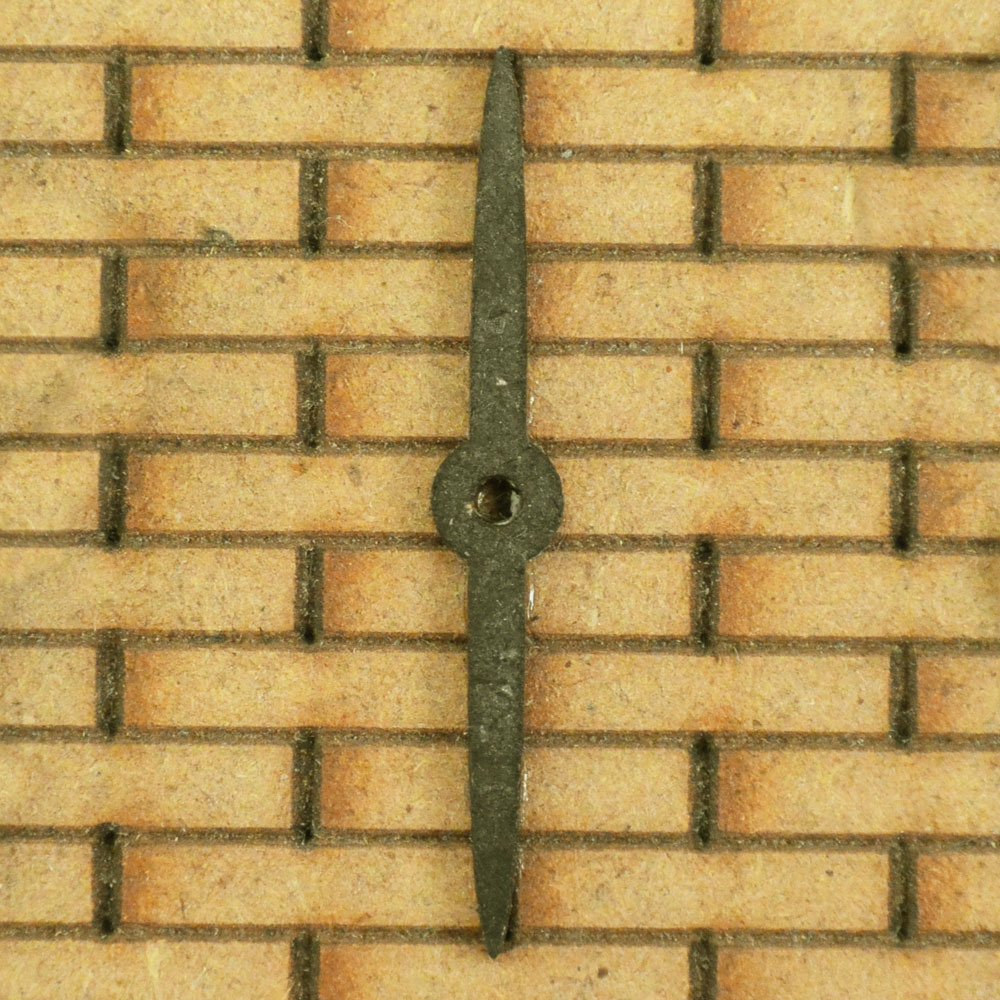
Dutch Muurankers (1550s onward)


4
The Dutch widely used muurankers—iron straps integrated during construction to connect transverse beams to masonry walls. Over time, these became decorative façade features.
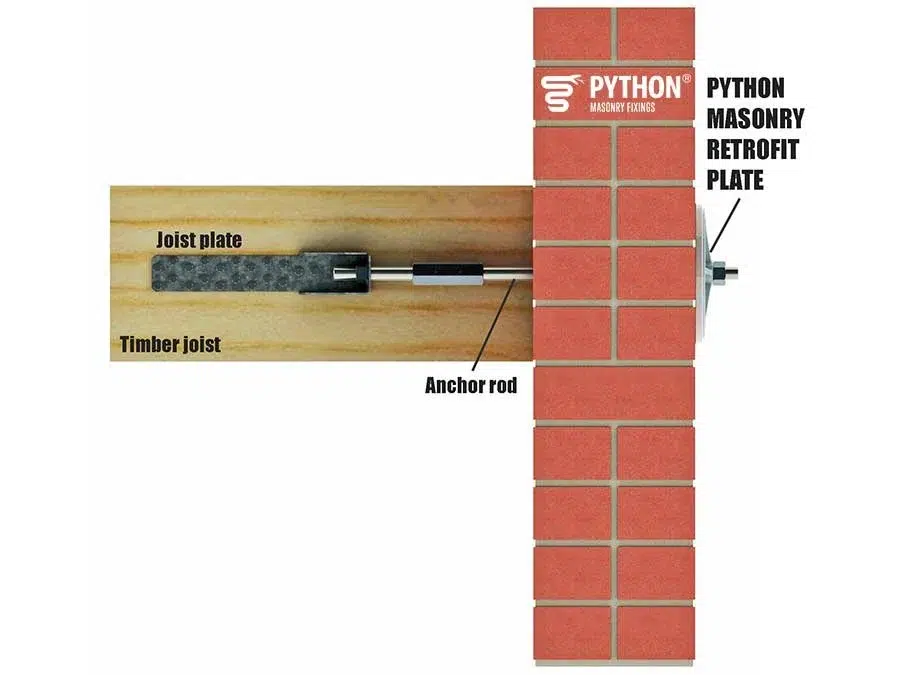
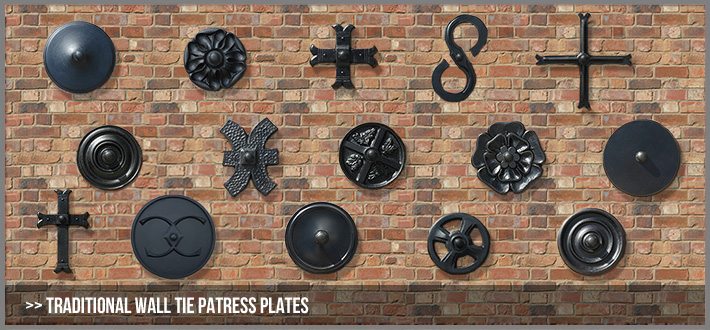
British Patress Plates

4
Patress bars ran through buildings, tying opposite walls together. In North America, similar concepts appeared as earthquake washers or star anchors, particularly in seismic regions like Charleston, South Carolina.
Modern systems refine these same structural principles—adding corrosion resistance and analytical design.
Modern Applications in Masonry Restoration
The most common candidates:
- 19th century two- and three-story commercial buildings
- Shared/common party walls with uneven roof heights
- Structures with rough-hewn timber framing
These buildings often possess strong timber diaphragms that can be re-engaged structurally.
Core Engineering Principle
Add an intermediate lateral support →
Reduce unbraced wall height →
Reduce bending moments →
Arrest displacement progression.
Even modest restraint forces (200–250 lbs/ft) can significantly improve stability when properly distributed.
Design Considerations
A proper retrofit begins with load development:
- Seismic and wind forces (per local code)
- Dead, live, and snow loads
- Eccentricity from joist bearing
- Existing out-of-plane displacement
Then the restraint is modeled as:
- A fixed support, or
- A lateral spring (when diaphragm flexibility must be accounted for)
Critical variables include:
- Anchor tensile capacity
- Masonry pullout strength
- Shear transfer into framing
- Wood connection capacities
In many cases, joists perpendicular to the wall can act in direct tension. When joists run parallel, alternative strategies—such as threaded rods tying opposite walls—become necessary.
Common Retrofit Configurations
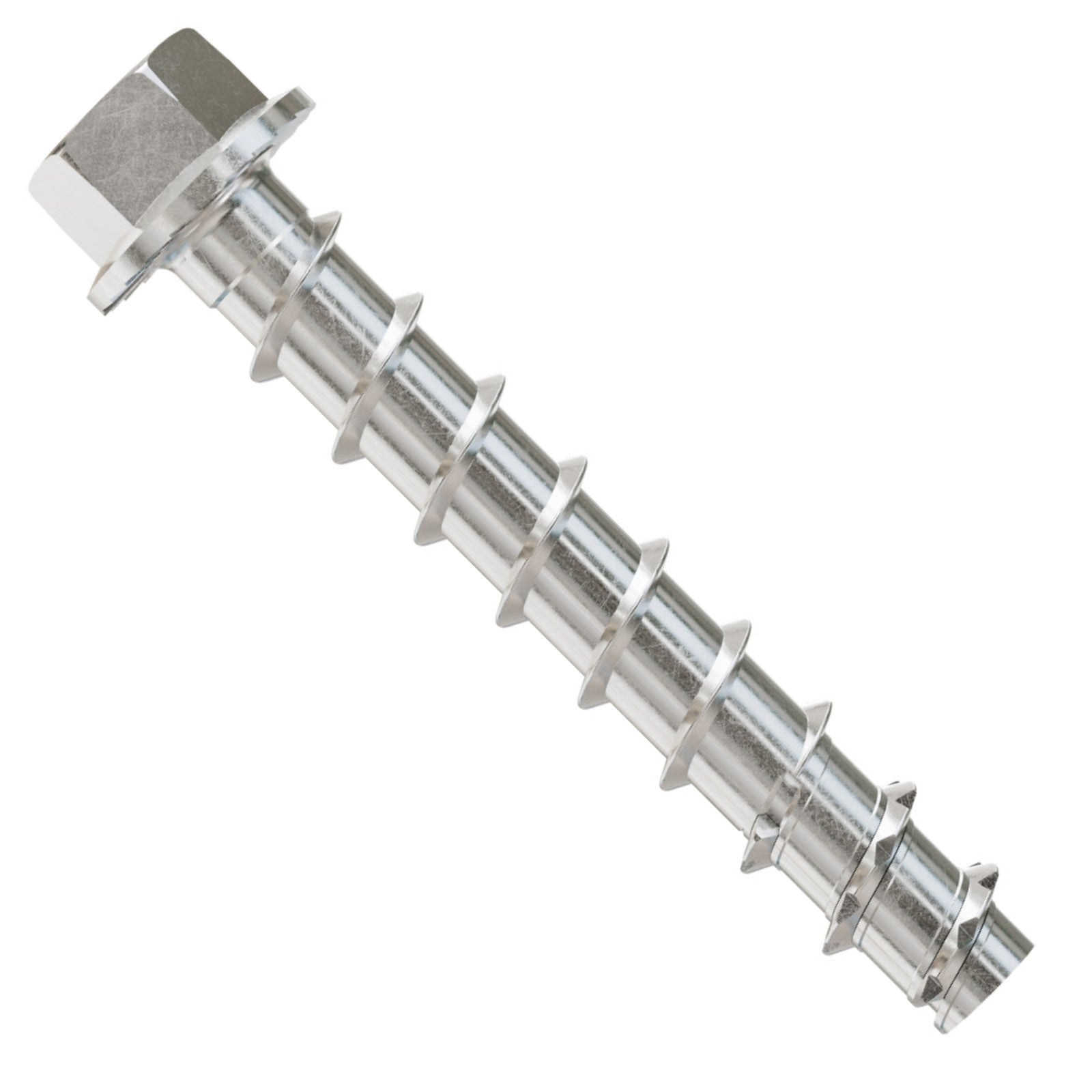
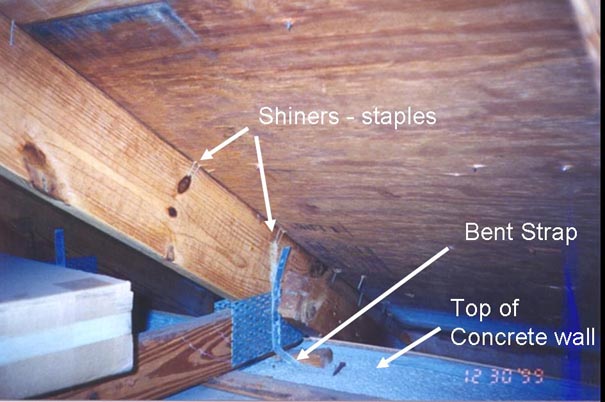
1. Strap Systems Between Joists

4
- Stainless or galvanized straps
- Shear fasteners into joists
- Epoxy or mechanical anchors into masonry
- Blocking or noggings for load distribution
Efficient for moderate loads and accessible framing.
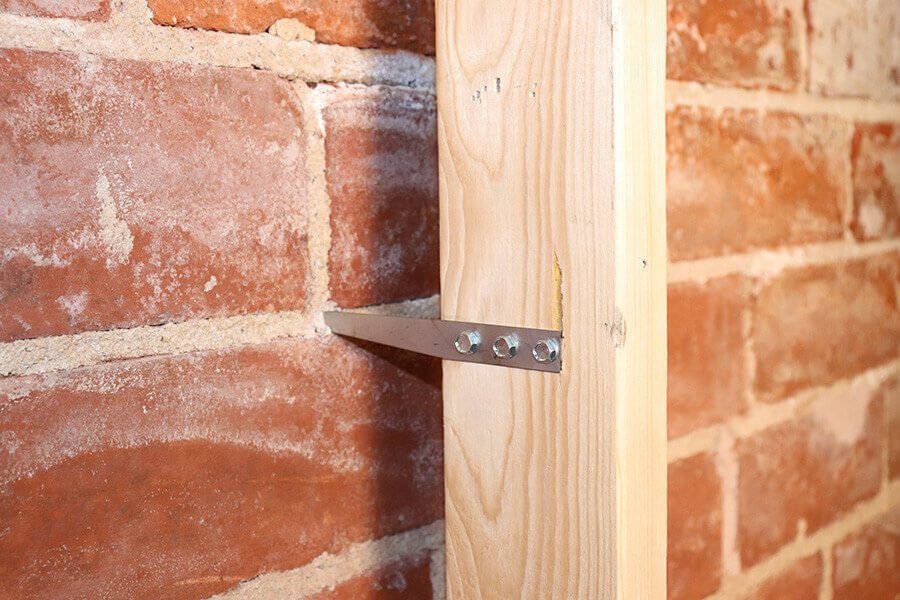
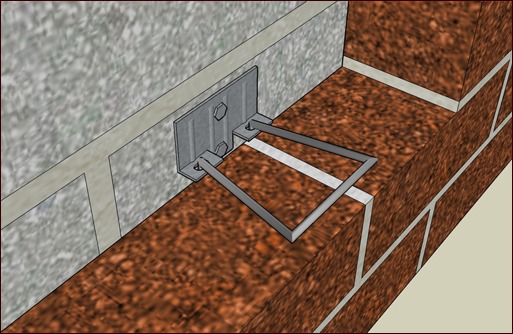
2. Top-of-Joist Muuranker-Style Plates
4
- Steel angle fixed to masonry
- Plate/strap over joist top
- Bearing leg sized for compression transfer
Useful when side access to joists is limited.
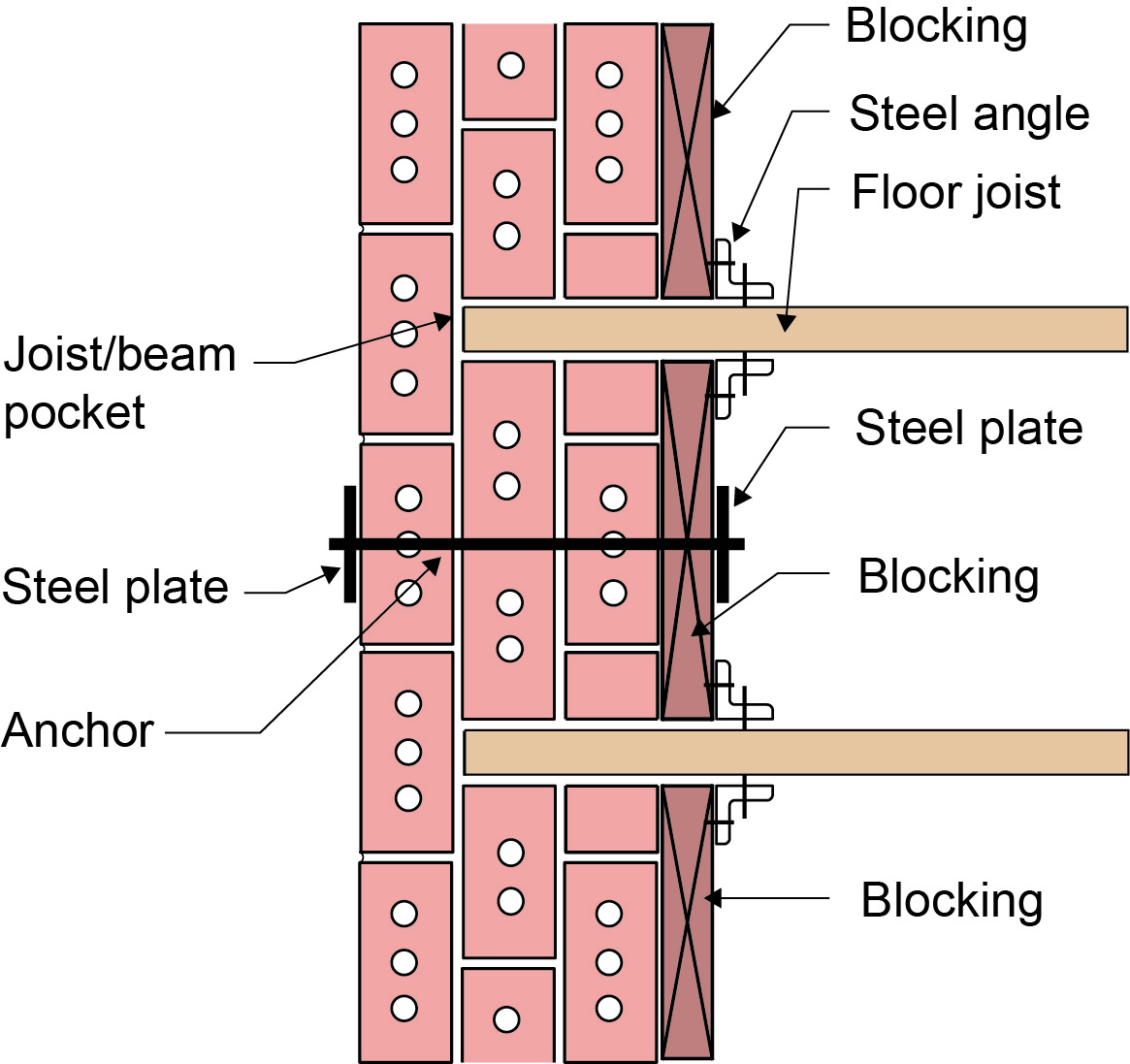
3. Through-Wall Threaded Rod Systems

4
- Threaded rods tying opposite walls
- Decorative or concealed exterior terminations
- Epoxy embedment for minimal visual impact
Best when diaphragm capacity is insufficient.
Material Selection: Corrosion Is the Silent Failure
Most historic multiwythe walls are mass masonry systems without modern drainage planes. They absorb significant moisture.
If anchors corrode:
- Iron oxide expansion induces cracking
- Localized spalling occurs
- Bond is compromised
For exterior walls:
- Hot-dipped galvanized steel (minimum)
- Stainless steel (preferred for longevity)
Given labor intensity, upgraded material cost is marginal relative to total project value.
Quality Assurance Is Not Optional
Design assumptions must be verified:
- Masonry material testing
- Mortar strength assessment
- In-situ anchor pull testing
- Adhesive bond verification
Epoxy anchors rely entirely on bond performance. Field testing is essential.
Conservative load assumptions should account for future weathering.
Why This Approach Works
Structurally, adding intermediate restraint is one of the most efficient ways to stabilize a wall. Instead of rebuilding:
- We re-engage existing framing
- Reduce moment demand
- Arrest progressive movement
- Preserve historic fabric
When paired with aggressive tuckpointing and moisture management, service life can be extended decades.
This is not cosmetic repair.
It is structural rehabilitation with preservation intent.
Conclusion
Lateral restraint anchors represent a cost-effective, preservation-oriented, structurally sound method for stabilizing multiwythe masonry walls before instability requires reconstruction.
When:
- Loads are properly resolved
- Corrosion-resistant materials are used
- Framing capacity is verified
- Installation is tested
These systems allow historic buildings to remain functional without major intervention.
It is a merger of traditional practice and modern engineering—exactly how masonry restoration should be approached.
For further reading:
External References
Seattle DPD Technical Guidance
https://www.seattle.gov/dpd/codes/dr/DR%206%202023.pdf
Muurankers historical reference
http://www.lowlands-l.net/history/reynolds_muurankers.php
Historic Ironwork Repairs
http://www.dowsingarchaeology.org.uk/Ironwork/iron-index.htm
Cheshire West & Chester Technical Note 8
(Archived Building Control Guidance)