Brick Repair vs. Masonry Restoration: Confusing the Two Is How Buildings Fail
These Are Not the Same Thing—And Pretending They Are Is Costly
“Brick repair” and “masonry restoration” are often used interchangeably. That alone should make you suspicious.
They are not different labels for the same work. They are fundamentally different scopes with different goals, risks, and outcomes. Treating them as equivalents is one of the most common—and expensive—errors in masonry intervention.
If you don’t understand the difference, you are likely fixing surfaces while structural problems continue unchecked.
Brick Repair: Component-Level Intervention
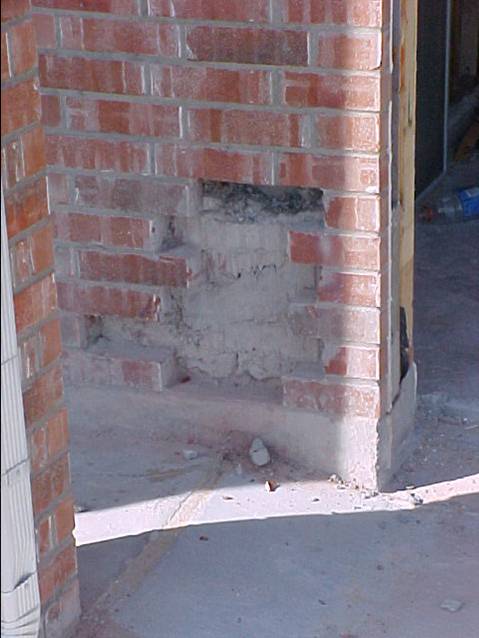
Brick repair addresses individual elements of a masonry system. It assumes the system itself is fundamentally sound and that distress is localized.
Typical brick repair includes:
- Replacing cracked, spalled, or damaged bricks
- Localized repointing of deteriorated mortar joints
- Minor impact or weather-related repairs
- Isolated corrective work with minimal investigation
When correctly applied, brick repair is appropriate for limited, non-structural deterioration. It is maintenance—not restoration.
The Critical Assumption Behind Brick Repair
Brick repair assumes:
- The wall is structurally stable
- Loads are moving as intended
- Distress is not progressive
- Prior repairs are not contributing to failure
If any of those assumptions are wrong, brick repair does not solve the problem—it hides it.
Masonry Restoration: System-Level Intervention
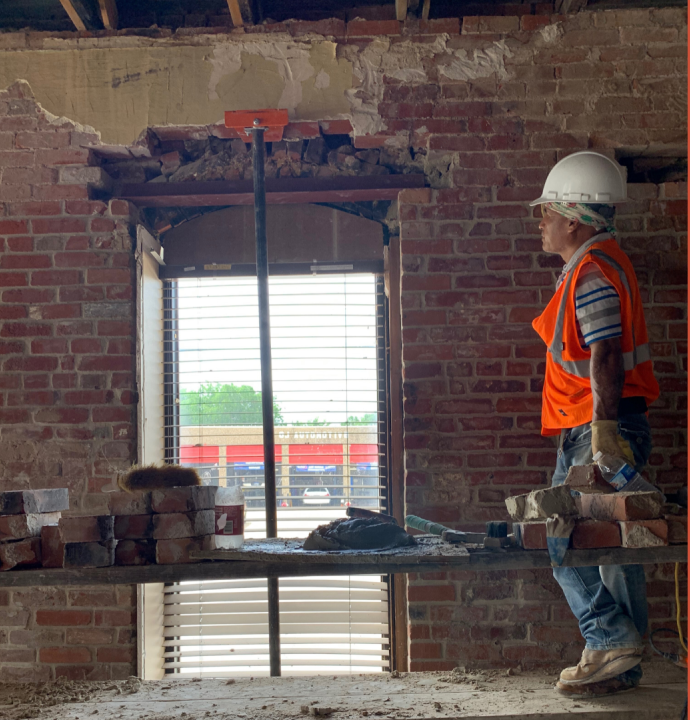
Masonry restoration addresses the behavior of the masonry system as a whole. It begins from the opposite assumption: that visible distress may be evidence of deeper failure.
Restoration often involves:
- Structural evaluation and diagnostics
- Load-path correction or stabilization
- Large-scale repointing using compatible materials
- Reconstruction of failed or compromised sections
- Integration of historic construction methods and intent
Masonry restoration is not about “making it look new.” It is about restoring function, capacity, and longevity, sometimes with minimal visual change.
Why Cost Comparisons Are Misleading
Brick repair is cheaper. That is true—and irrelevant.
Lower cost does not mean better value if the intervention fails to address the real problem. Repeated brick repairs on a failing system often exceed the cost of proper restoration over time, while compounding damage in the interim.
Masonry restoration appears expensive because:
- It requires diagnostics
- It uncovers hidden conditions
- It addresses causes rather than symptoms
Those costs are not inefficiencies. They are reality asserting itself.
The Most Common Failure Pattern
- Distress appears
- Brick repair is selected because it’s “simpler”
- Underlying structural or material issues continue
- Repairs crack, detach, or fail
- The building is now worse than before intervention
At that point, restoration becomes unavoidable—and more complex due to prior inappropriate work.
Historic Buildings Raise the Stakes
In historic masonry, brick repair without restoration-level understanding is especially dangerous.
Historic walls often:
- Rely on mass, not reinforcement
- Use mortars intentionally weaker than masonry units
- Have undergone undocumented alterations
- Carry loads they were never designed to carry
Applying modern assumptions to historic systems through superficial repair is how irreversible damage occurs.
A Useful Rule of Thumb (Not a Substitute for Diagnostics)
- Choose brick repair when deterioration is isolated, non-progressive, and confirmed non-structural.
- Choose masonry restoration when distress patterns repeat, migrate, widen, or defy simple explanation.
If you cannot confidently justify brick repair without caveats, you are already in restoration territory.
Final Word
Brick repair fixes parts.
Masonry restoration addresses systems.
One maintains appearances.
The other preserves buildings.
At Masonry Problem Solver™, the decision is never made by price, convenience, or optimism. It is made by diagnostics, structural behavior, and respect for how masonry actually works.
Choosing the wrong approach doesn’t just waste money—it accelerates failure.