
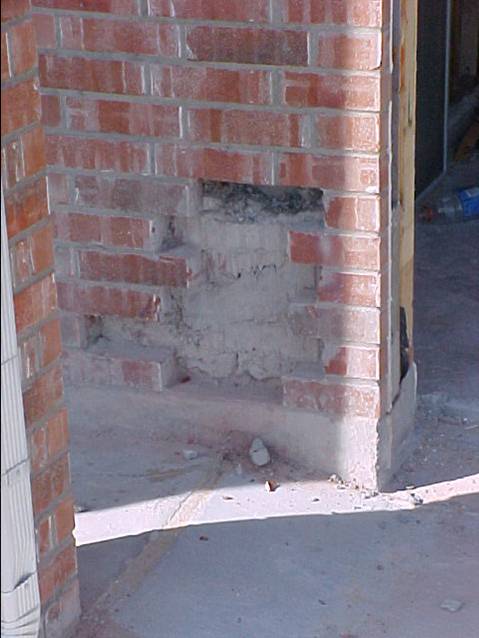
Weep Holes Are Not Optional: A Hard-Learned Lesson in Moisture, Masonry, and Structural Risk
Moisture intrusion remains the most persistent and underestimated cause of masonry deterioration. The evolution of the weep hole—from ignored void to critical drainage element—reveals a long history of builders misunderstanding how water actually behaves inside walls. This article traces the shift from ventilation-based thinking to drainage-based design, explains why cavity walls fail without functioning weep systems, and clarifies the structural, durability, and liability consequences of getting this wrong.
The Core Problem: Water Always Wins
Water does not respect intent, drawings, or good craftsmanship. It follows physics.
For more than a century, masonry construction has been plagued by one recurring error: the belief that walls can be made watertight. They cannot. Masonry is porous. Mortar cracks. Joints open. Pressure differentials exist. Moisture willenter the wall system.
The real question is not if water gets in—but whether the wall is designed to let it out.
Historically, many walls were not.
Dampness Was a Health Crisis Before It Was a Structural One
In the 19th century, damp buildings were blamed—often correctly—for disease, respiratory illness, and uninhabitable interiors. Medical professionals pushed architects and builders to “fix” dampness, but without a true understanding of moisture movement.
The result was predictable:
- Walls were ventilated, not drained
- Evaporation was relied upon instead of gravity
- Interior air quality was compromised
- Moisture remained trapped inside masonry
Builders knew dampness was dangerous. They just didn’t know why it persisted.
That misunderstanding still echoes in modern failures.
Ventilation Was the Wrong Solution
Early cavity walls were designed around a flawed assumption:
“If air can circulate, moisture will evaporate.”
This logic drove the widespread use of:
- Hollow walls
- Air bricks
- Interior vents
- Vertical channels connecting cavities to interior spaces
None of these reliably removed liquid water.
Ventilation does nothing when:
- Water accumulates faster than evaporation
- Condensation occurs inside cavities
- Mortar droppings bridge cavities
- Wind-driven rain creates pressure forcing water inward
In short: air does not defeat gravity.
Cavity Walls Created a New Problem: Trapped Water
Cavity walls were a major advancement—but also a new failure mechanism.
They:
- Reduced direct rain penetration
- Improved thermal performance
- Introduced concealed moisture zones
- Hid deterioration until damage was advanced
Water entering the outer wythe had nowhere to go.
Without drainage, cavities became:
- Condensation chambers
- Corrosion accelerators
- Freeze-thaw incubators
- Tie and anchor failure zones
This is where modern veneer failures begin.
Drainage Was Solved Elsewhere—Just Not in Buildings
Ironically, engineers already understood drainage.
Retaining walls, dams, and infrastructure had used weep holes since the 1800s to:
- Relieve hydrostatic pressure
- Prevent structural displacement
- Avoid freeze-thaw damage
- Preserve wall stability
Civil engineers knew the rule:
“Water must be allowed to escape.”
But that rule took decades to enter architectural masonry practice.
The Weep Hole: A Small Opening with Massive Consequences
True weep holes differ fundamentally from vents or air bricks.
They are:
- Located at the base of the exterior wythe
- Or above interruptions (lintels, shelf angles)
- Intended for liquid drainage, not air movement
- Positioned to work with flashing systems
- Dependent on cavity continuity
Once adopted (roughly 1920–1940), they changed everything.
Walls could finally:
- Drain incidental water
- Relieve moisture accumulation
- Protect interior wythes
- Extend service life
Without them, moisture remains indefinitely.
The Rain Screen Principle Made It Official
By the mid-20th century, building science finally caught up.
The rain screen principle acknowledged a hard truth:
Water penetration is inevitable. Pressure equalization and drainage are the only defenses.
A proper masonry wall therefore requires:
- An outer sacrificial wythe (the screen)
- A drained and flashed cavity
- Pressure equalization
- A sealed inner wall
- Functional weep holes
Miss any one of these and failure accelerates.
Modern Failures Are Old Mistakes Repeated
Today’s masonry failures often trace back to familiar errors:
- Weep holes omitted “for aesthetics”
- Mortar blocking drainage paths
- Flashings terminated incorrectly
- Ties corroding in wet cavities
- Weeps installed but nonfunctional
- Retrofits ignoring concealed moisture
These are not cosmetic issues. They are latent structural risks.
Engineers inherit them during investigations—often too late.
Inspection Reality: If You Can’t See Water Exit, It Isn’t Draining
A critical rule for inspections:
A wall that does not visibly drain does not drain.
Engineers and architects should verify:
- Presence and spacing of weep holes
- Clear cavity behind weeps
- Proper flashing slope and termination
- No mortar bridging
- Compatibility with ties and anchors
Assumptions here are dangerous.
Liability Is the Modern Driver
Today, moisture is no longer framed as a health scare—it’s a risk and liability issue.
Failure to address drainage can result in:
- Structural tie corrosion
- Veneer displacement
- Litigation
- Insurance claims
- Professional exposure
The record is clear: walls fail silently before they fail visibly.
Conclusion: Drainage Is Not a Detail—It Is the System
Weep holes are not accessories.
They are not optional.
They are not aesthetic compromises.
They are the only reason masonry walls survive moisture intrusion.
Every generation that ignored drainage paid for it later—in repairs, failures, and replacements.
Engineers, architects, and contractors do not get that luxury anymore.
Masonry walls are not waterproof systems. Moisture intrusion is inevitable, and without properly detailed and functioning weep holes tied to continuous flashing, water will accumulate within the cavity, accelerating material deterioration, tie corrosion, and structural risk.